centaronline.org
 politeia.institute
 crnonabelo.com





Debate “Energy Security of Serbia in the Light of the Current Crisis – Challenges and Solutions”
DIALOGUE AT THE CENTER – SOCIAL FORUM
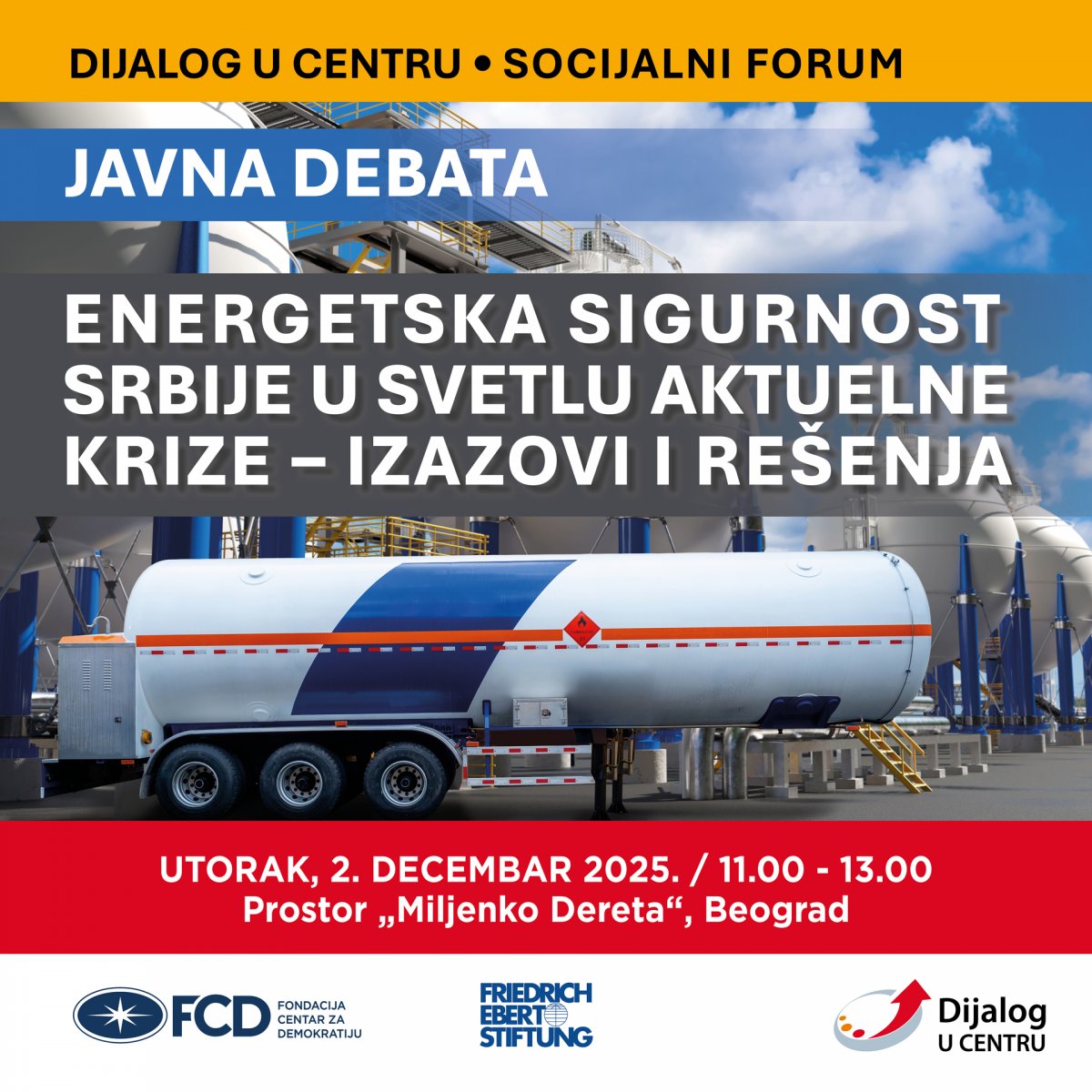
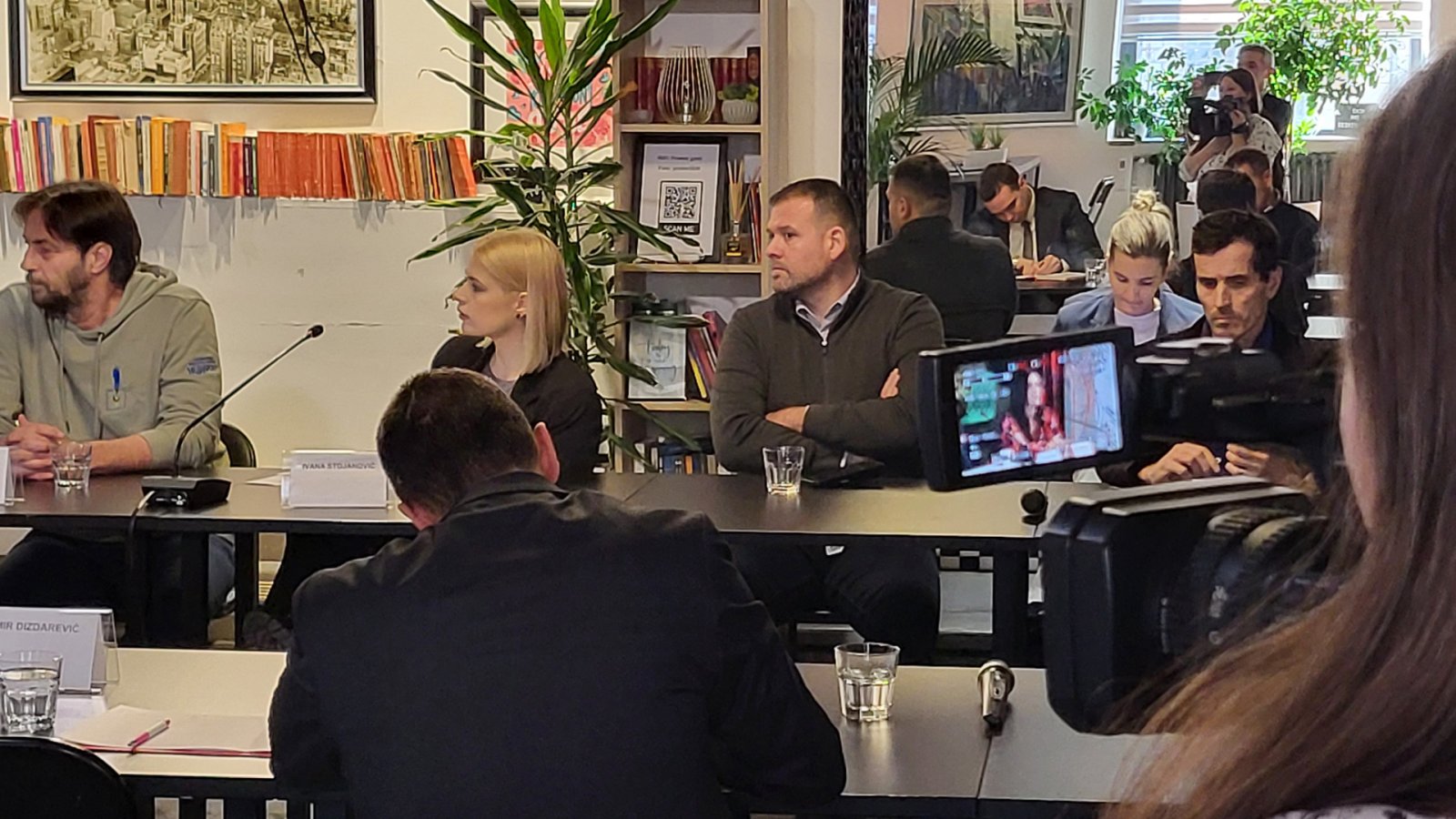
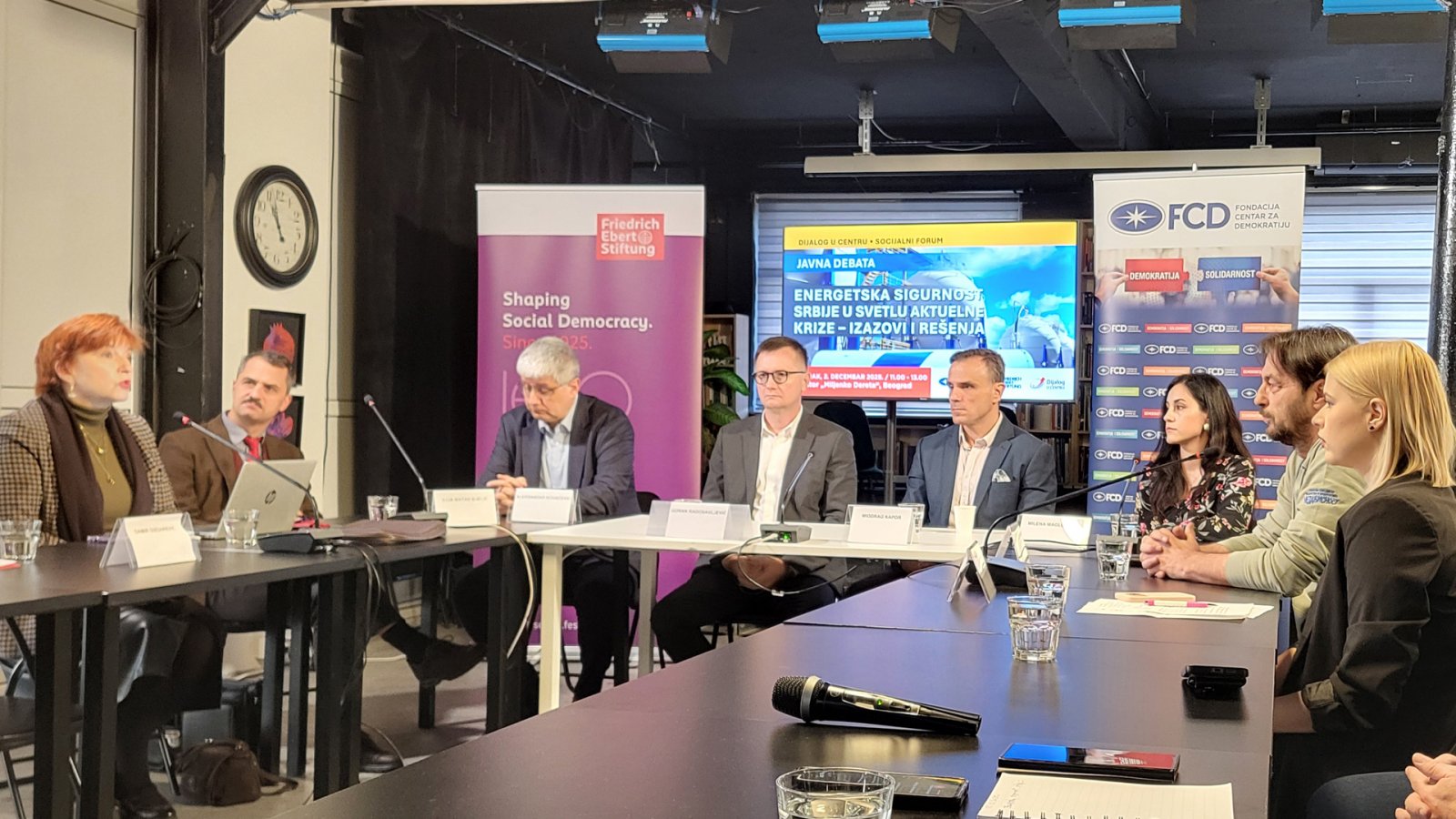
On 2 December 2025, the Center for Democracy Foundation, in cooperation with the Friedrich Ebert Foundation, organized a debate dedicated to one of the most important issues for the economic, social, and political development of Serbia – energy security in the context of global instability and changed geopolitical dynamics.
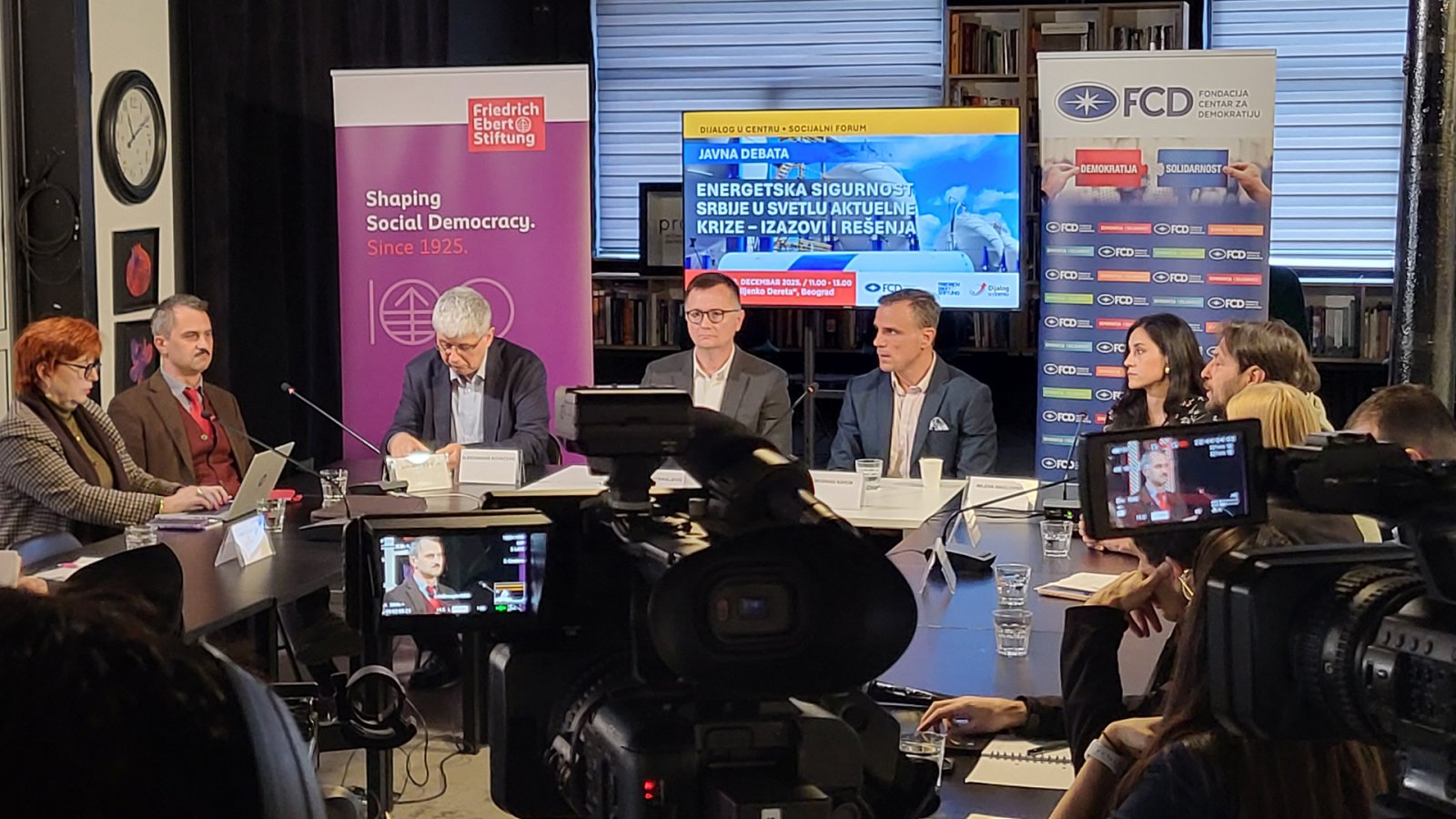
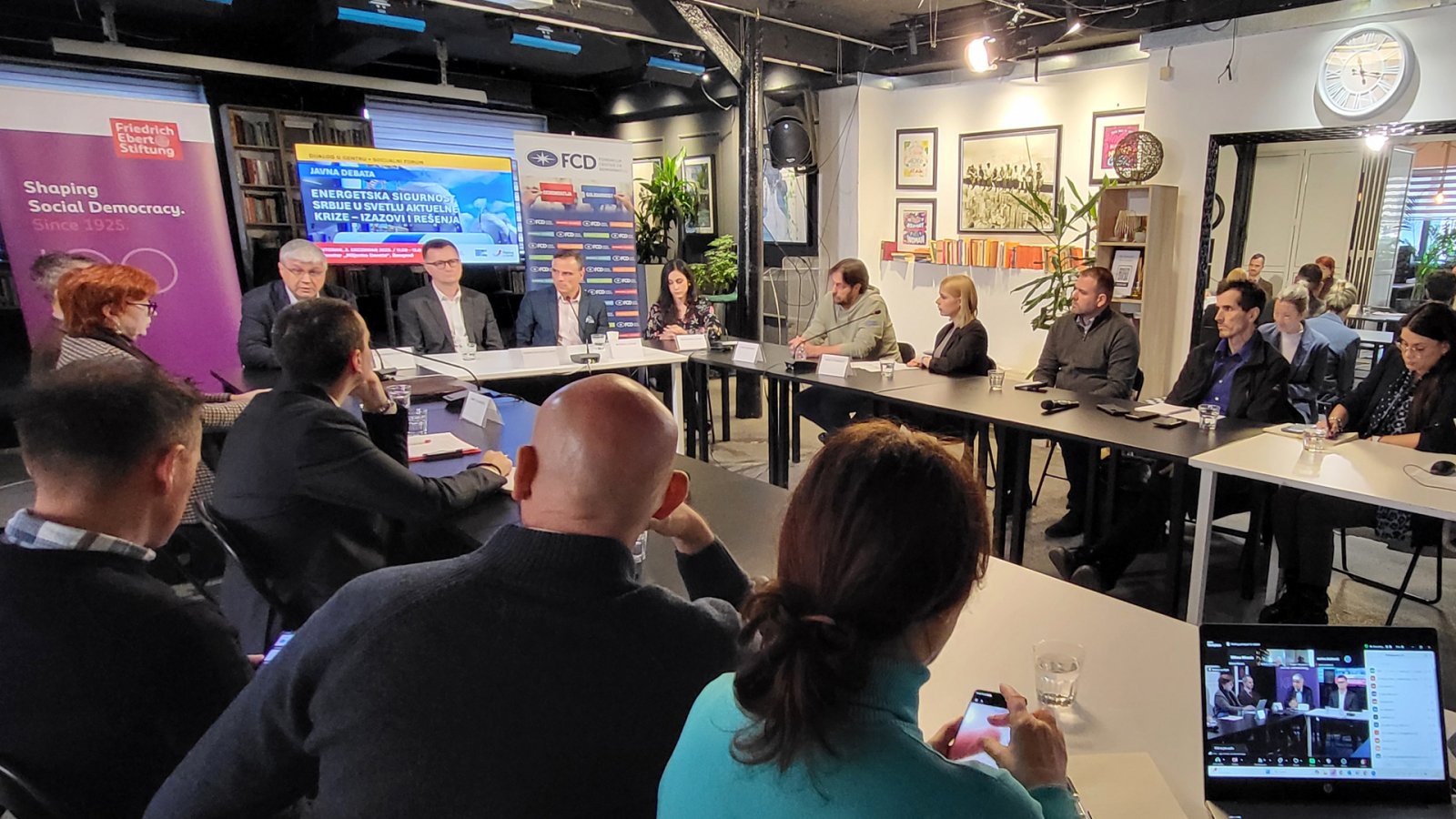
The debate entitled “Energy Security of Serbia in the Light of the Current Crisis – Challenges and Solutions” was attended by: Aleksandar Kovačević, energy expert; Goran Radosavljević, FEFA Faculty; Ilija Batas Bjelić, Institute of Technical Sciences of SASA; Miodrag Kapor, energy expert; Damir Dizdarević, BFPE Foundation for a Responsible Society; Milena Maglovski, Energy Portal; Zoran Obradović, UGS Nezavisnost; Nataša Vučković, Center for Democracy Foundation. The discussion was moderated by journalist Ivana Stojanović.
The aim of the debate was to examine the key challenges facing Serbia in the energy sector, including dependence on Russian energy sources, risks related to sanctions, as well as the consequences of the transit of Russian gas through EU countries. Participants had the opportunity to jointly consider possible scenarios, policies, and technical solutions that could contribute to greater resilience and long-term system stability.
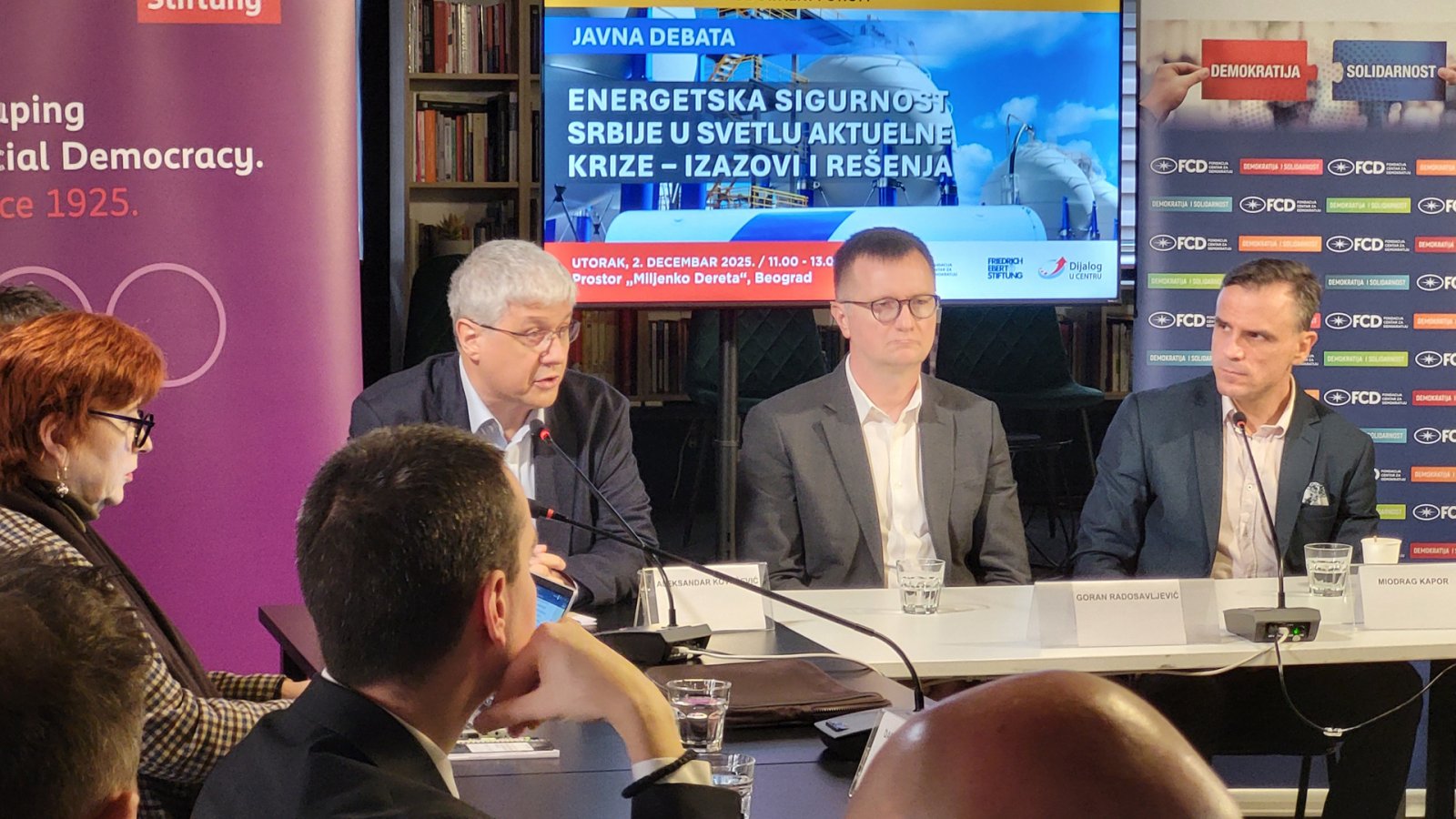
The discussion covered three thematic blocks: the current situation and vulnerabilities, risks and consequences for citizens and the economy, as well as potential strategies, ranging from diversification of energy sources, through changes in ownership structures, to regional cooperation and legal mechanisms for protection from sanctions. Special emphasis was placed on the role of the state, companies, and civil society in shaping energy development policy and protecting the public interest.
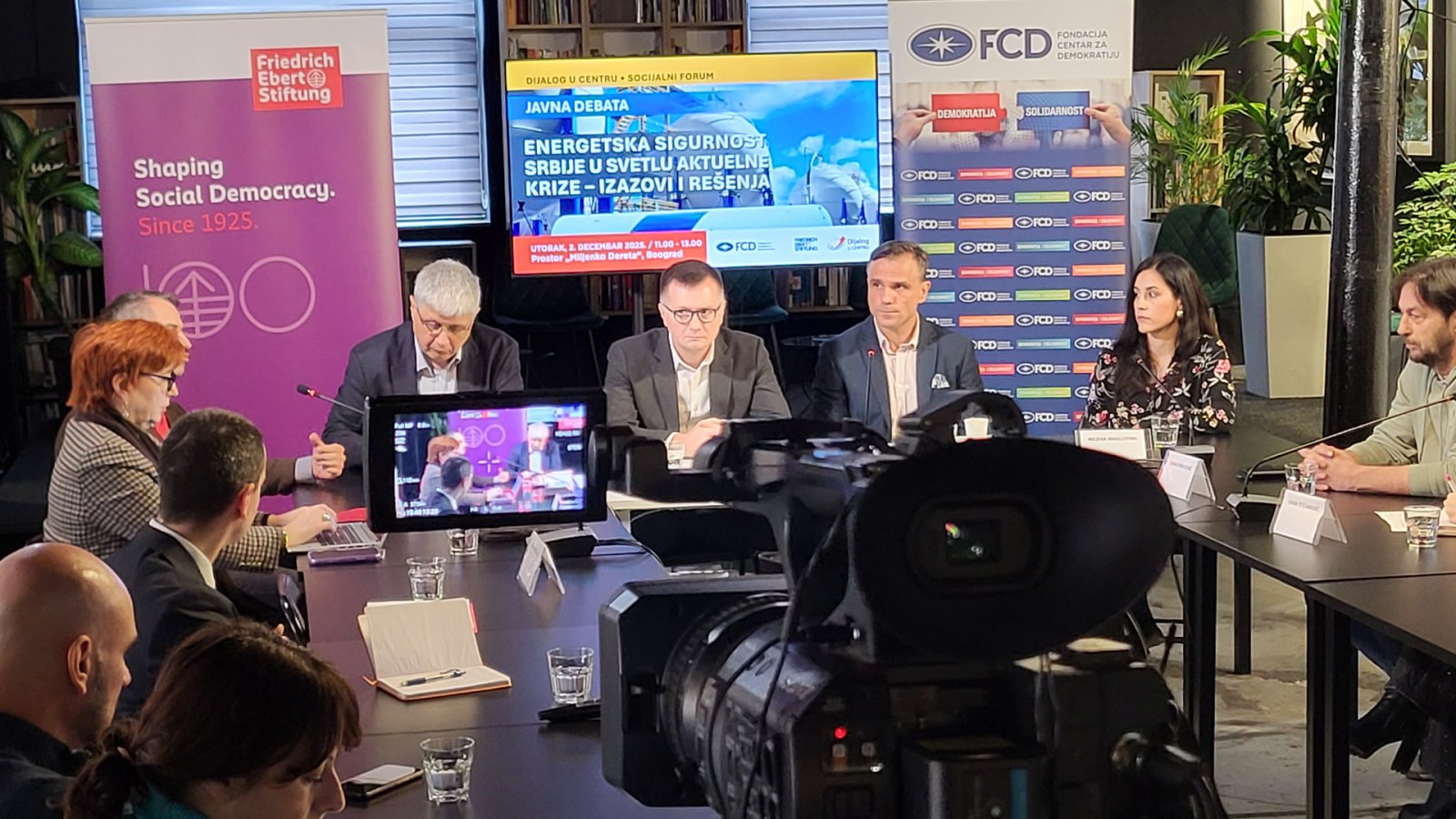
It was emphasized during the discussion that citizens deserve to have detailed, precise, and objective information about what is happening and what Serbia will look like from 1 January from the perspective of energy capacities, as this is reflected in our economy and our everyday lives. It is necessary to insist on a high level of responsibility of decision-makers and a high level of transparency, because this is an issue that concerns all citizens and the future of this country. Also, the seriousness of the opposition and its involvement in these discussions is necessary, because this is not a matter of one authority or one government. It is important that all actors be involved; without dialogue on these issues, there can be no good solutions. Social dialogue and serious conversations with citizens are needed, in which the media also have an extremely responsible role, as well as all other capacities at the local and national level that can convey important information to citizens.
Excessive reliance on the import of energy sources from other countries, neglect of local resources, as well as the absence of a systematic and long-term energy policy were assessed by the panelists as some of the main reasons for the current energy crisis in Serbia. As another significant aspect of the causes of the energy crisis, the absence of sovereignty in terms of oil and gas supply and excessive dependence on other countries were highlighted. Serbia neglects its own resources and invests very little in the local resources it possesses, such as solar, wind, and biogas energy. These resources could, at least at the level of households and the economy, significantly reduce dependence on fossil fuels.

In order for Serbia to be in a more favorable energy position than it is currently, a completely new energy policy is needed. The participants in the discussion agreed that new decisions on energy and other policies should be aligned with the policy of the European Union. Accession to the EU is a matter of primary importance. Our economic development will also depend on this. We are dependent on Europe, and integration into the European Union is an important decision that we must make.
The debate was organized by the Center for Democracy Foundation in cooperation with the Friedrich Ebert Foundation within the project DIALOGUE AT THE CENTER – SOCIAL FORUM.
Center for Democracy Foundation
Video
PUBLICATIONS
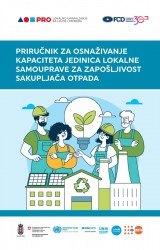 Manual for Strengthening the Capacities of Local Self-Government Units for the Employability of Waste Pickers
 NCEU Book of Recommendations 2025
 Manual “The Path to Employment: Get to Know Your Rights and Opportunities”
 Challenges for Organising and Collective Bargaining in Care, Administration and Waste collection sectors in Central Eastern European Countries
 Public Policy Proposals – Collective Bargaining (CEECAW)
 CDF in Cities and Municipalities: Together for a Better Life in Local Communities
 Comparative reports on collective bargaining - CEECAW
 POLITEIA – Regional School for Youth Participation 2025 (leaflet)
 Report on the State of Labour Rights in the Republic of Serbia in 2024
 Unlocking Collective Bargaining Power in Three Sectors: A Call to Action
 Main Issues of Labor Legislation in Serbia
 New Monitoring Report by the “SDGs for All” Platform: Is the End Goal in Sight?
 NCEU Book of Recommendations 2024 (Summary)
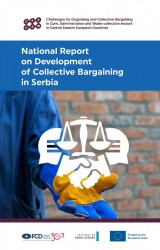 National reports on collective bargaining in Serbia - CEECAW
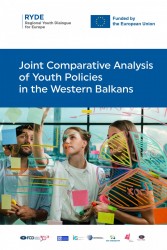 The Comparative Analysis of Youth Policies in the Western Balkans (WB)
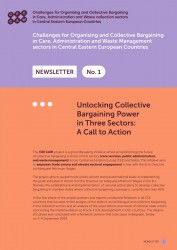 Unlocking Collective Bargaining Power in Three Sectors: A Call to Action
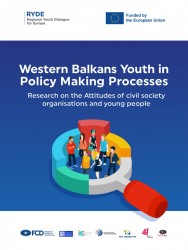 Western Balkans Youth in Policy Making Processes
 SDGs for All Platform newsletter (December 2023)