centaronline.org
 politeia.institute
 crnonabelo.com




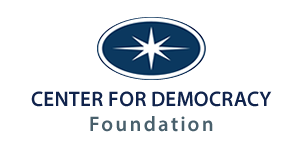

The European Parliament and Serbia
Author: Nataša Vučković, for Novi Magazin

Last week, many people in Serbia were surprised by the sharp and perhaps most critical resolution of the European Parliament on the situation in Serbia, entitled “Polarization and Growing Repression in Serbia, One Year After the Tragedy in Novi Sad.” Out of 720 members, 457 voted in favor of the Resolution, 103 were against, and 72 abstained. These numbers, and of course the text of the Resolution itself, convey several important messages.
First, the Progressives no longer have many friends left in the European Parliament. About one-third of those who supported the Resolution belong to the European People’s Party (EPP), which represents the vast majority of the total 188 members of this political group, of which the SNS is an associate member. This kind of vox populi in the EP, as an expression of concern for the situation in Serbia, should be viewed through the prism of the dominant anti-Russian narrative within the European Union since the beginning of the war in Ukraine, the need and intention to consolidate the European space, the accelerated reforms in Montenegro and Albania, and the strong European support for Moldova.
Second, the range of topics covered, the level of criticism, and the recommendations addressed to the European Commission and Member States show that the EU’s patience with Serbia is wearing thin, but also that, in the context of a renewed enlargement process, Europe still cares about Serbia. Through 25 points, the Resolution criticizes the conduct of the Serbian authorities across different policy areas. The critique is so detailed and comprehensive that it even condemns the suspension of public transport which prevented demonstrators from joining protests — rarely does a resolution contain such a level of detail and precision.
Third, the Resolution was adopted only about two weeks before the expected publication of the European Commission’s annual report — perhaps as a final warning to the Serbian government that it still has a brief opportunity to address the issues of the REM (Regulatory Authority for Electronic Media), the voter register, and several others.
 Fourth, the adoption of this Resolution and the mobilization of MEPs were influenced by the persistent presence of Serbian opposition politicians and MPs in Brussels and Strasbourg since late summer. This presence built upon the awareness created by the long-lasting student protests. Until now, Europeans had expressed sympathy for the students and their demands, albeit with the caution typical of politicians accustomed to dealing with leaders and elected representatives, and with the perception that the political orientation of the student movement was not entirely clear. However, dialogue with the pro-European opposition seems to have significantly reduced earlier reservations. Moreover, the visible reactivation of the opposition, its refusal to remain on the margins — where everyone, including the students, had pushed it — and its return to parliament have given many hope that it is possible to form a unified opposition bloc that would also cooperate with student assemblies.
Fifth, regarding the topics covered by the Resolution, there is hardly any issue that has not, for months, been at the center of public attention, student actions, civic gatherings, or media discussions.
Above all, support for student and civic protests is direct and strong. The Members of the European Parliament hold the Serbian leadership politically responsible for growing repression, the normalization of violence, and the weakening of democratic institutions — particularly for spreading conspiracy theories, which senior state officials have resorted to. The Resolution criticizes the lack of progress in investigating allegations of the use of sound cannons, as well as arbitrary arrests, violent incidents, and police brutality.
The Resolution expresses deep dissatisfaction with the clear misalignment of Serbia’s foreign policy with that of the EU and its failure to comply with European standards. For example, it repeatedly expresses concern about China’s presence in Serbia: the demolition of the canopy in Novi Sad is placed, first and foremost, in the context of non-transparent intergovernmental agreements between Serbia and China — an issue repeatedly raised by the European Commission, including in last year’s report, since such agreements contradict EU public procurement standards. The Resolution condemns the “dehumanizing” language President Vučić uses toward EU politicians and strongly denounces verbal attacks on Members of the European Parliament. It directly criticizes Vučić for describing the protests as a “color revolution” allegedly organized by Western intelligence services — a narrative also echoed by Russia, which accused the EU of “conducting subversive activities to fuel the protests.” It points to anti-European and pro-Russian propaganda in government-controlled media and calls on the Serbian authorities to take measures against anti-Western campaigns. It also mentions the participation of foreign nationals in a training camp aimed at influencing the elections in Moldova this autumn. Even while clearly supporting student demonstrations, the Resolution notes the use of radical symbols of extreme nationalism and the pro-Russian and chauvinistic rhetoric that appeared during protests, emphasizing that these have been criticized both within Serbia and abroad.
The Resolution calls for urgent improvement of the framework for free and fair elections. It condemns the government’s retaliatory behavior toward employees in education and culture. It demands the immediate establishment of a regular system for university financing. It calls on the authorities to allow all those who left the country due to political repression to return to Serbia. It expresses support for civil society.
An interesting demand is also made for transparent inspections of all infrastructure projects and for preventing the use of facilities that lack the required permits and safety guarantees. Particularly concerning for the authorities is the point where the European Parliament calls on all countries that have announced participation in Expo 2027 in Serbia to take into account the evidence of widespread corruption connected to the government and reports of non-compliance with basic construction standards.
Practically everything that students, civic activists, civil society organizations, lawyers, experts, and journalists have been discussing in recent months has found its place in this document. Finally, Members of the European Parliament call on all political actors, civil society representatives, and all interested parties in Serbia to engage in constructive dialogue to reduce deep political and social polarization. The Resolution supports sending a European mission to assess the situation in Serbia. It calls on European officials not to make unfounded positive statements about Serbia’s reform process and even urges the Commission to initiate sanctions against specific individuals who violate human rights.
What should be done now? The Resolution provides encouragement to all those fighting for human rights, for free and fair elections, for free media, for the rule of law, and for an independent judiciary. One battle may seem to have been won. But what should be done with that victory? Can a clear European narrative be created in Serbia that would strengthen pro-European sentiment and thus deepen the support of European institutions for a democratic and European Serbia? Can unity and a common front of progressive political and social groups be achieved? I am convinced that it can — and must.
And finally, can a constructive dialogue be achieved when one side, the ruling one, relentlessly seeks to discredit the other? It is difficult — but dialogue must not be abandoned. Dialogue is essential — in parliament, in the media, in institutions. Without it, polarization only deepens.
Author: Nataša Vučković
Source: Novi Magazin
Photo: NM / Đurađ Šimić


PUBLICATIONS
 Manual “The Path to Employment: Get to Know Your Rights and Opportunities”
 NCEU Book of Recommendations 2025
 Challenges for Organising and Collective Bargaining in Care, Administration and Waste collection sectors in Central Eastern European Countries
 Public Policy Proposals – Collective Bargaining (CEECAW)
 CDF in Cities and Municipalities: Together for a Better Life in Local Communities
 Comparative reports on collective bargaining - CEECAW
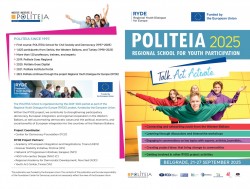 POLITEIA – Regional School for Youth Participation 2025 (leaflet)
 Report on the State of Labour Rights in the Republic of Serbia in 2024
 Unlocking Collective Bargaining Power in Three Sectors: A Call to Action
 Main Issues of Labor Legislation in Serbia
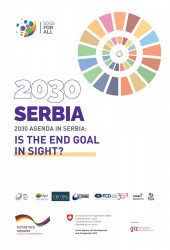 New Monitoring Report by the “SDGs for All” Platform: Is the End Goal in Sight?
 NCEU Book of Recommendations 2024 (Summary)
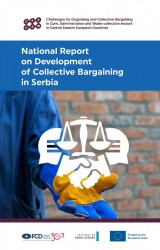 National reports on collective bargaining in Serbia - CEECAW
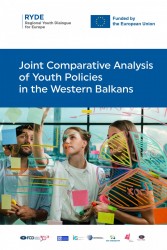 The Comparative Analysis of Youth Policies in the Western Balkans (WB)
 Unlocking Collective Bargaining Power in Three Sectors: A Call to Action
 Western Balkans Youth in Policy Making Processes
 SDGs for All Platform newsletter (December 2023)
 Analysis: Poverty Reduction Through Sustainable Agriculture in Serbia (with Summary)