centaronline.org
 politeia.institute
 crnonabelo.com





The First Plenary Session of the Intersectoral Working Group for Monitoring the Implementation of the Reform Agenda of the Republic of Serbia
National Convention on the European Union (NCEU)

Monitoring reforms on Serbia’s European path
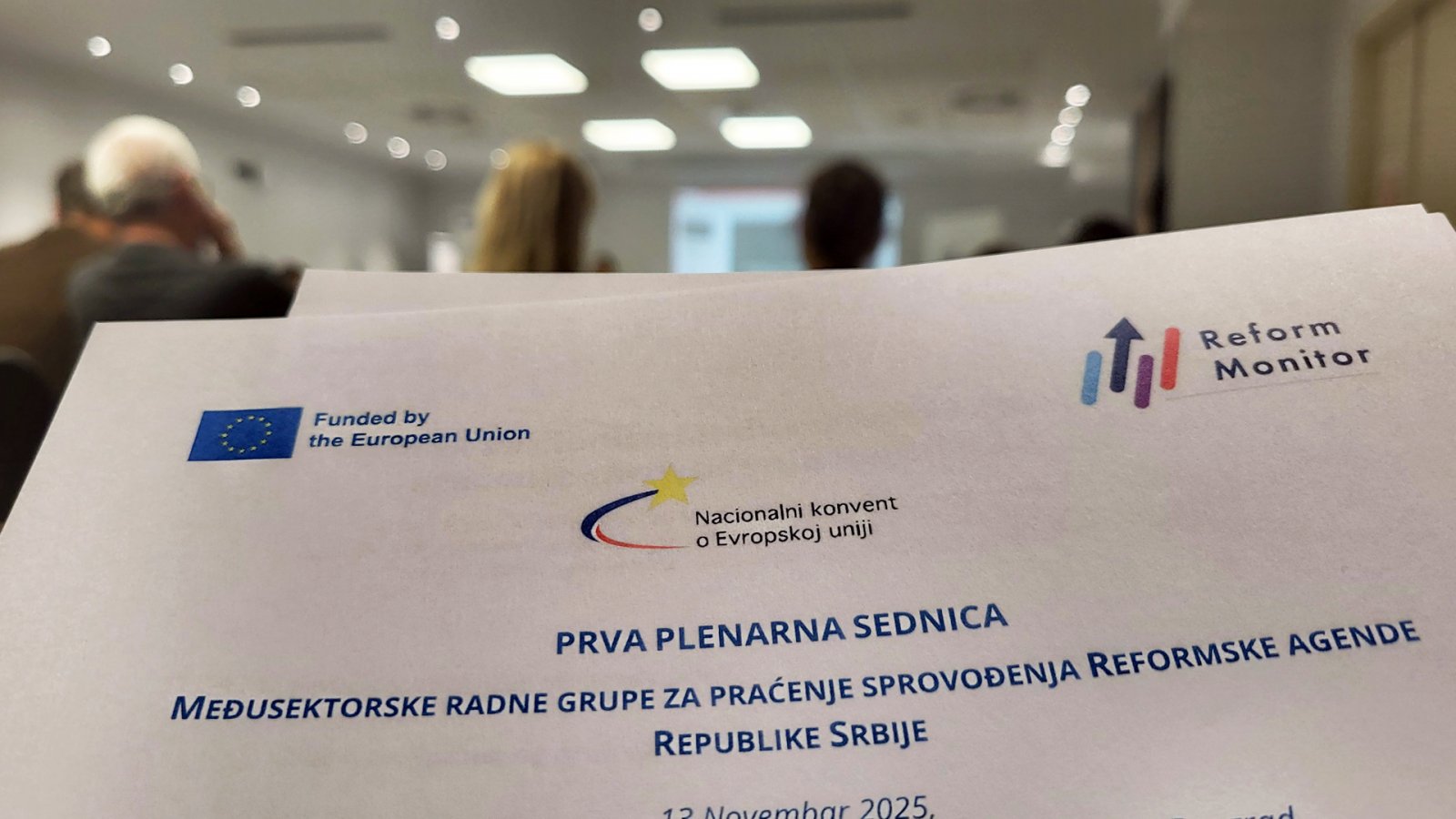
The first plenary session of the Intersectoral Working Group (IWG) for monitoring the implementation of the Reform Agenda of the Republic of Serbia was held on 13 November 2025 in Belgrade, with the participation of more than 30 representatives of civil society organizations from different parts of Serbia gathered in this newly established working group of the National Convention on the European Union (NCEU).
The Intersectoral Working Group was established in order to ensure the active participation of civil society in the implementation and monitoring of the Reform Agenda of the Republic of Serbia, through oversight of progress in reform steps, provision of analytical support, external monitoring and assessment of the impact of reforms on European integration, as well as informing the public about the results. In its work, the IWG will cooperate with representatives of the European Union and state authorities, with the aim of monitoring the implementation of this planning document, linked to EU support in the amount of EUR 1.6 billion by the end of 2027.
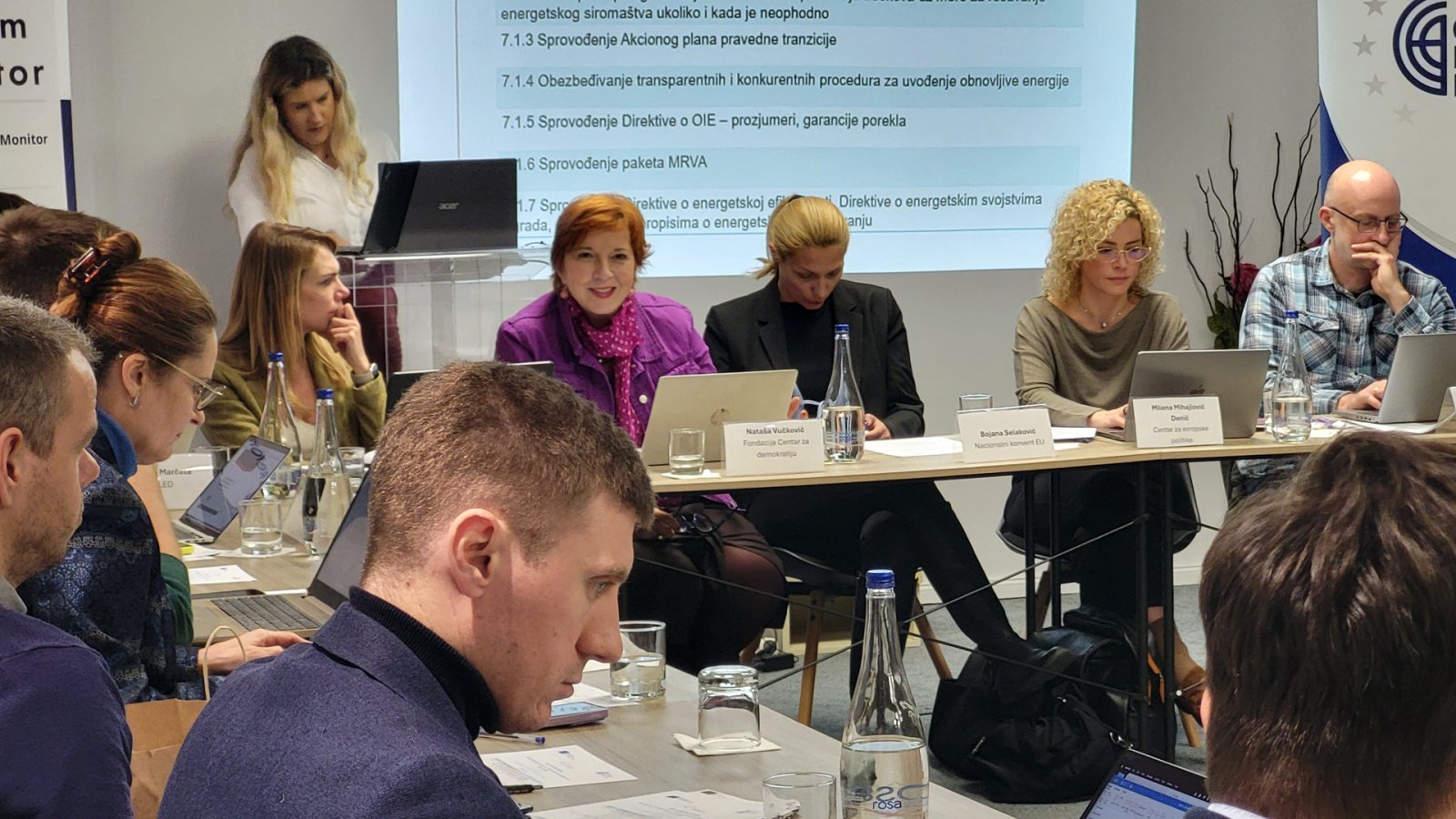
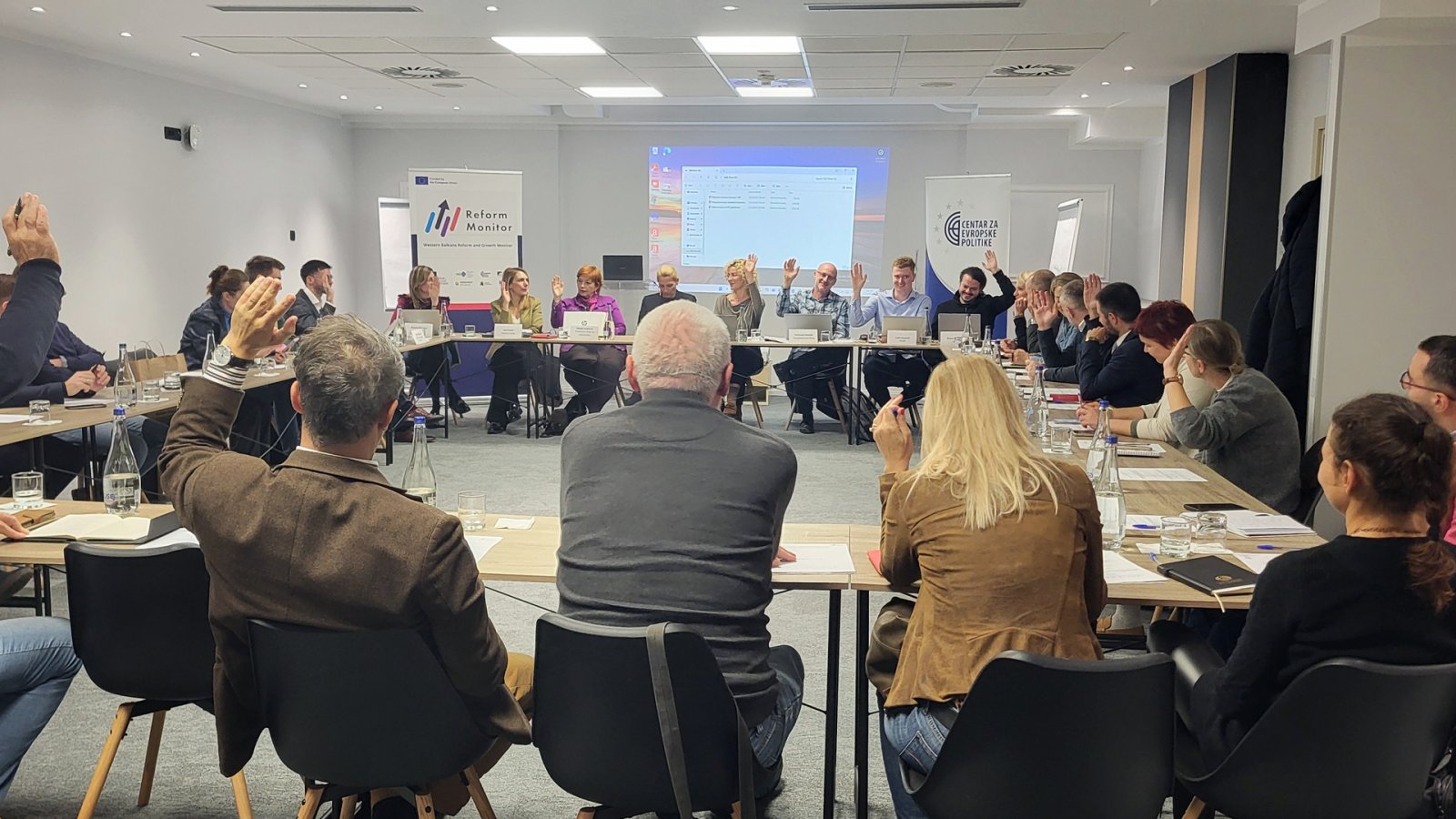
At the session, the Rules of Procedure were adopted, and the coordinators of the six IWG subgroups – in the areas of the business environment, digital transition, green transition, human capital, fundamental rights and the rule of law, and financial and budgetary implications of reforms – presented the areas of activity and action plans of their subgroups. On that occasion, they presented key insights and challenges in monitoring reform obligations, pointing to the need for clearer planning, defining a detailed monitoring methodology, and stronger mutual coordination. The members of the IWG particularly warned about the worrying practice of using steps from the Reform Agenda to initiate amendments to the legal framework that go beyond the scope of the agreed reforms, with a tendency to undermine the legal standards established so far in various areas.
Nataša Vučković (Center for Democracy Foundation), coordinator of the Human Capital Subgroup, spoke about several thematic areas that indicate the complexity of this field and the need to consider human capital issues also through their connection with sectoral strategies.
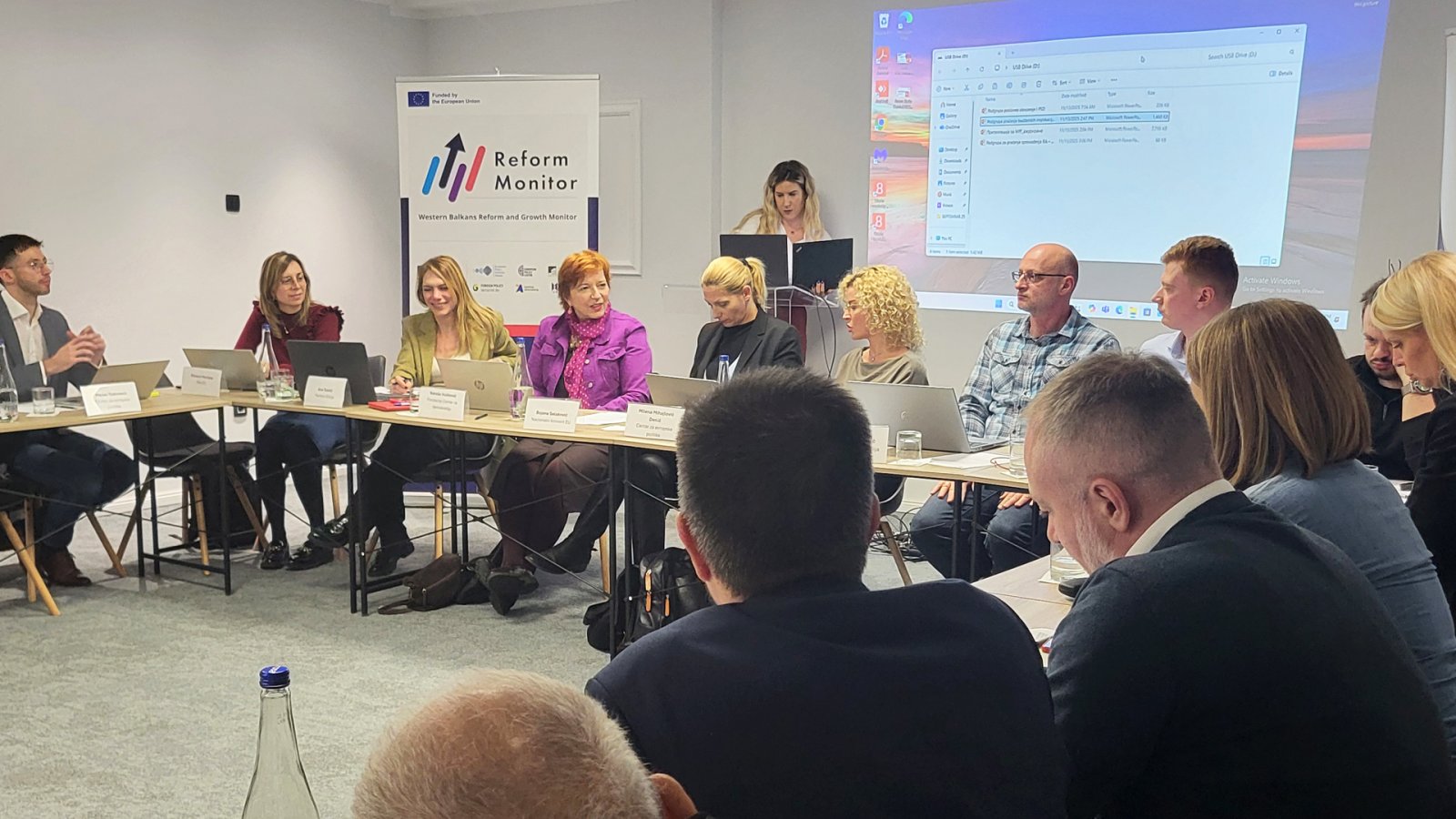
In the continuation of the session, the report from the first meeting of the Reform and Growth Facility (RGF) Monitoring Committee, held on 2 October, was considered, at which representatives of the European Union, the Government of Serbia and civil society had the opportunity to discuss the level of implementation of the Reform Agenda to date. The coordinators were presented with the key thematic segments of the meeting, ranging from an overview of the implementation of the Instrument and governance and monitoring mechanisms, to horizontal issues and a segment dedicated to WBIF investments.
The IWG session was organized by the National Convention on the European Union (NCEU) and the European Policy Centre (CEP), with the support of the regional project Western Balkan Reform and Growth Monitor, which is predominantly financed by the European Union, as well as the NCEU support project supported by the Open Society Foundation – Western Balkans.
The European Policy Centre also presented the methodological framework and key results of the pilot monitoring of the Reform Agenda, prepared within the WB Reform and Growth Monitor project, as well as the functionalities of the regional digital platform that will serve for the exchange of information on the Growth Plan for the Western Balkans and the publication of expert analyses.
This platform represents a significant step towards a stronger contribution of civil society organizations, the academic community and the private sector to the implementation of reforms in Serbia, while improving transparency and regular monitoring of the results of the Reform Agenda.
Source: NCEU, CEP, CDF
PUBLICATIONS
 Manual “The Path to Employment: Get to Know Your Rights and Opportunities”
 NCEU Book of Recommendations 2025
 Challenges for Organising and Collective Bargaining in Care, Administration and Waste collection sectors in Central Eastern European Countries
 Public Policy Proposals – Collective Bargaining (CEECAW)
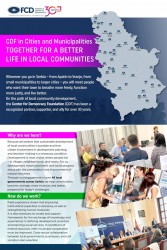 CDF in Cities and Municipalities: Together for a Better Life in Local Communities
 Comparative reports on collective bargaining - CEECAW
 POLITEIA – Regional School for Youth Participation 2025 (leaflet)
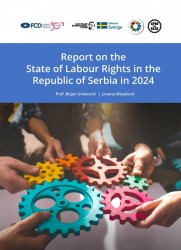 Report on the State of Labour Rights in the Republic of Serbia in 2024
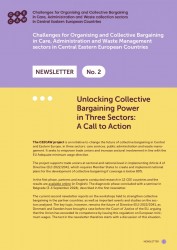 Unlocking Collective Bargaining Power in Three Sectors: A Call to Action
 Main Issues of Labor Legislation in Serbia
 New Monitoring Report by the “SDGs for All” Platform: Is the End Goal in Sight?
 NCEU Book of Recommendations 2024 (Summary)
 National reports on collective bargaining in Serbia - CEECAW
 The Comparative Analysis of Youth Policies in the Western Balkans (WB)
 Unlocking Collective Bargaining Power in Three Sectors: A Call to Action
 Western Balkans Youth in Policy Making Processes
 SDGs for All Platform newsletter (December 2023)
 Analysis: Poverty Reduction Through Sustainable Agriculture in Serbia (with Summary)